
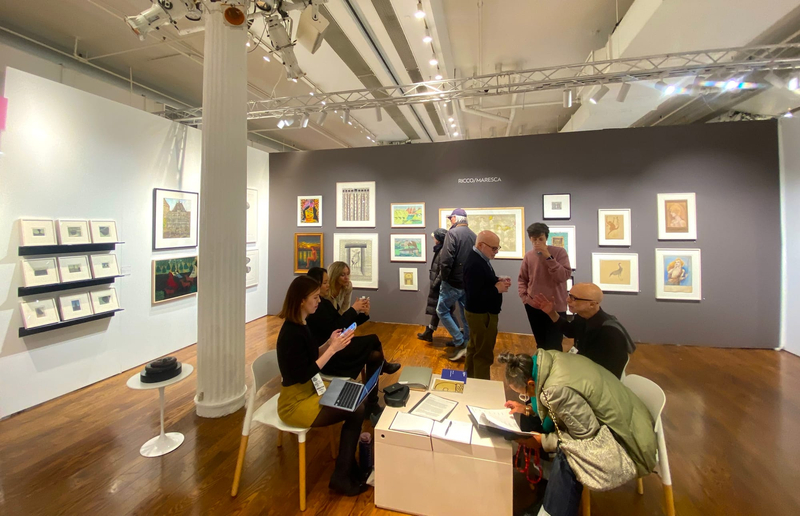
This year’s edition proves that the key to viewing work by so-called “autodidact” artists is recognizing its capacity and merit as equal to all other art forms.
The Outsider Art Fair has enriched New York City’s art world since its inception in 1993, presenting eclectic and idiosyncratic artists who challenge traditional fine art hierarchies. The fair serves as an egalitarian anchor during unstable times in the art market and the United States, marking an optimistic moment to watch art quickly sell off the walls and a range of visitors express genuine delight. The event, this year featuring 68 exhibitors at Chelsea’s bustling Metropolitan Pavilion through Sunday, March 22, has long been an antidote to the sterile, pretentious nature of a blue-chip gallery fair.
What exactly qualifies as “outsider art,” though? “Self-Taught,” “Folk,” “Visionary,” “Naive,” and “Autodidactic” are other terms historically used to describe artists from so-called unconventional backgrounds; however, the artists on view here at the fair are most importantly unified by their existence on the periphery of academic and institutional contexts. While research in these genres celebrates the exceptional creativity of outsider artists, it paradoxically limits our aesthetic appreciation of their work by undervaluing them as separate from formally trained artists.
Several must-see booths at the Outsider Art Fair displayed brilliant, rigorous practices that signal that the key to viewing outsider art is recognizing its capacity and merit as equal to all other art forms, regardless of superficial distinctions.
Near the entrance, where an array of exuberantly dressed collectors, artists, and everyday visitors filed into the labyrinth of booths, Philadelphia’s Fleisher/Ollman Gallery is a mandatory stop, with a plethora of canonical self-taught masters on display. This includes inimitable artists such as William Edmondson, a Nashville stonecutter who carved figurative stone sculptures and became the first Black artist to have a solo show at the Museum of Modern Art in 1937.
“It’s a fair that’s gained so much traction in the last 10 years. It’s brought in people who have never really experienced this material before,” John Ollman, co-owner of the gallery, told me. “I like to represent these masterpieces.”