
There are lots of reasons to make art: it might be the process of making itself; it might be the desire to communicate something and to be part of a larger art discourse; it might be an internal urge to express; or it might be to create an art product for a particular market. The artist Adrienne Leban once said that the need to express is a human phenomenon akin to breathing—we inhale, we exhale. Impression, expression. We take in the world, and we are compelled to give something back.
Almost as many reasons as there are to make art, there are many different kinds of art fairs. As places to see art—to have an emotional experience of art—art fairs are often lacking. By nature, they are generally a place of art consumerism. They are a shopping experience curated for the collector. Not to be totally reductive, there is often great work at fairs, and just like anything in the art world, there is a veil of meaning that shrouds an art fair with a mystique. Regardless, seeing work at an art fair is usually not an experience of in-depth criticality, nor is there much room for having an intimate reading of a work. And then there’s the Outsider Art Fair.
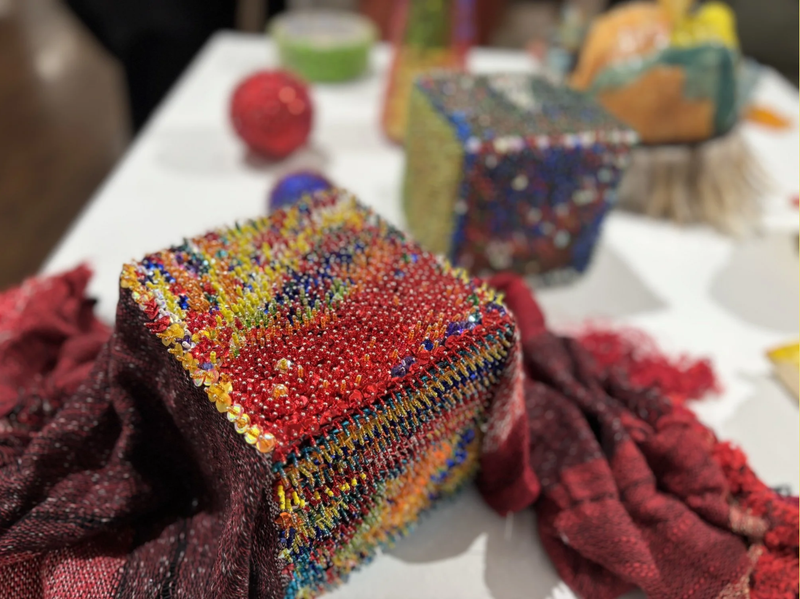
Walking into the Outsider Art Fair is a visual onslaught: work is displayed with little room to let the eye breathe between works. At first blush, there are lots of busy patterns and garish colors together. There are lots of animal shapes and woven fuzziness. For someone used to seeing art in a white-cube setting where everything is precious, it takes some time to adjust to the Outsider Art Fair style. But slowly, the works come into focus. With a little patience and openness, the works themselves unfold. Then the surprises reveal themselves.